

If you’ve been walking around Downtown, The Heights, or Journal Square lately, you’ve probably noticed two things: there are more "For Sale" signs than there were a year ago, and the prices aren't exactly dropping like a stone.
As a lifelong Jersey City resident, I’ve seen this city change from a quiet neighbor of Manhattan to a global destination in its own right. But as we move through April 2026, the game for first-time home buyers has changed. The market has stabilized, inventory is actually up by about 11% compared to last year, but the financial math is harder than ever.
In fact, right now in Jersey City, buying a home can cost roughly 40% more per month than renting a similar unit. That doesn't mean you shouldn't buy: it means your strategy has to be perfect. You aren't just looking for a "vibe"; you're looking for a protected investment.
Here are the 7 biggest mistakes I’m seeing first-time buyers make in Jersey City right now, and how we can avoid them to ensure you don’t overpay.
1. Shopping Before the "Real Math" (Taxes + Insurance + HOA)
Most buyers start their journey on a search app, looking at a listing price and a generic mortgage calculator. In Jersey City, that is a recipe for a financial headache.
Between our unique property tax assessments, rising homeowners insurance premiums in 2026, and fluctuating HOA fees in condo buildings, the "sale price" is only about 60% of the story. I’ve seen buyers fall in love with a brownstone in Harsimus Cove only to realize the taxes were double what they expected.
The Strategy: Before we tour a single property, we run the "Real Math." We look at the actual tax record, not the estimated one. We check if the building has a tax abatement that’s about to expire. If you don't account for the total carrying cost, you’re not just overpaying: you’re overextending.
2. Falling for the "Flip"
Jersey City is full of beautiful old "bones," but it’s also full of developers looking to make a quick buck. You’ll see a row home in The Heights with gorgeous wide-plank floors, white shaker cabinets, and trendy matte black fixtures. It looks like a magazine cover.
But as your Protective Strategist, I’m looking at what’s behind those cabinets. Is the electrical panel from 1970? Is the plumbing a mix of galvanized pipe and PVC? Many "flips" use cosmetic fixes to hide structural or mechanical aging.

The Strategy: We look past the staging. We check the age of the HVAC, the condition of the foundation in the basement, and the quality of the window installations. If the developer cut corners on the things you can see, they definitely cut corners on the things you can’t.
3. Ignoring the Building’s Health (Low HOA Reserves)
If you’re looking at a condo in a mid-rise or high-rise building, you aren't just buying a unit; you're joining a business. One of the biggest mistakes buyers make is failing to investigate the building’s financial health.
In 2026, labor and material costs for building maintenance have skyrocketed. If a building has "low HOA reserves," it means they don't have a rainy-day fund. When the roof needs replacing or the elevator breaks, the building will issue a "Special Assessment": a surprise bill that can range from $5,000 to $50,000 per unit.
The Strategy: We demand the condo association’s meeting minutes and their most recent reserve study. If the building is poorly managed, I’ll tell you to walk away. No "perfect view" of the Manhattan skyline is worth an unexpected $30,000 bill six months after closing.
4. Waiting for a "Crash" That Isn't Coming
I hear this a lot: "Jeremy, I'm going to wait for the bubble to burst."
Here is the direct, Decisive Advocate truth: While inventory is up 11%, prices in Jersey City remain resilient. Why? Because we are the "Sixth Borough." As long as Manhattan remains the economic engine of the world, people will want to live in Jersey City.
Waiting for a 2008-style crash means you're missing out on the equity you could be building today. We aren't in a bubble; we're in a stabilized market with higher-than-average demand.
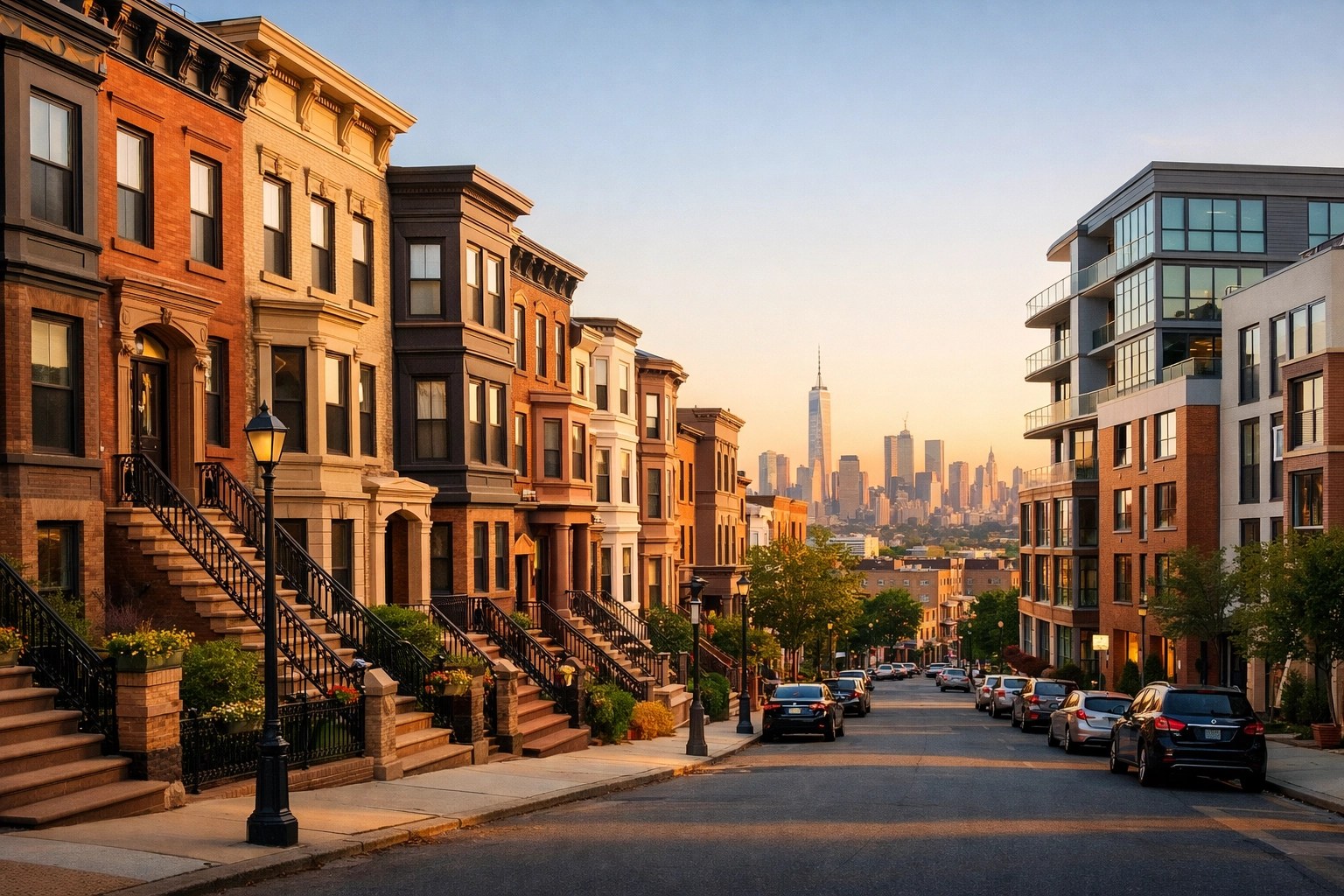
The Strategy: Instead of waiting for a crash, we look for value. We look for the neighborhoods like West Bergen or parts of Journal Square that are still appreciating faster than the city average. We buy for the long term (5–10 years), where short-term market fluctuations don't matter.
5. Skipping the Neighborhood "Night Walk"
A block in Downtown Jersey City can feel like a sanctuary at 2:00 PM on a Tuesday. But what does it feel like at 10:00 PM on a Friday? Or 6:00 AM on a Monday when the PATH train commuters are rushing by?
Jersey City is a collection of micro-neighborhoods. One block can be quiet and residential, while the next block over is a nightlife hub or a major truck route.
The Strategy: I tell all my clients to do the "Night Walk." Go to the property at different times of the day. Check the lighting. Check the noise levels. Check how hard it actually is to find a parking spot when everyone is home from work. You’re buying the neighborhood, not just the house.
6. Emotional Bidding in a Stabilized Market
In 2021 and 2022, people were bidding $100k over asking price just to get a foot in the door. In 2026, that is usually a mistake.
Currently, the average "Days on Market" (DOM) in our area is hovering around 55 days. That is a lifetime in real estate. If a house has been sitting for 45 or 60 days, the seller is starting to sweat.
The Strategy: We use the data to our advantage. If a property is stale, we don't offer asking price: we negotiate down. We look for "motivated sellers" who need to move for work or family. In this market, the person who remains the least emotional usually wins the best deal.

7. Not Having a Dedicated Buyer’s Agent
Some buyers think they’ll get a better deal by going directly to the listing agent. This is a massive mistake.
The listing agent has a legal and fiduciary duty to the seller. Their job is to get the seller the highest price and the best terms. They are not there to tell you that the basement flooded two years ago or that the HOA is about to sue the developer.
The Strategy: You need a dedicated Buyer’s Agent who acts as your Decisive Advocate. You need someone who knows Jersey City block-by-block and isn't afraid to tell you when a deal is bad. Best of all, in most cases, the seller still pays the commission for your representation. There is no reason to go into the biggest purchase of your life without a pro in your corner.
The Jersey City Bottom Line
Buying your first home in Jersey City in 2026 is a move that requires more than just a pre-approval letter: it requires a localized strategy. Whether you're looking at a sleek condo in Exchange Place or a multi-family in Greenville, the goal is to protect your future wealth by making smart, data-driven decisions today.
Don't let the complexity of the 2026 market keep you on the sidelines, and don't let a "pretty" house blind you to a bad investment.
Ready to find a home that actually makes sense for your bank account?
Let’s sit down and look at the "Real Math" together. I’ve helped hundreds of neighbors navigate this city, and I’d love to help you too.
Reach out here for a no-pressure consultation with Jeremy Morrieson.
Leave a Reply